
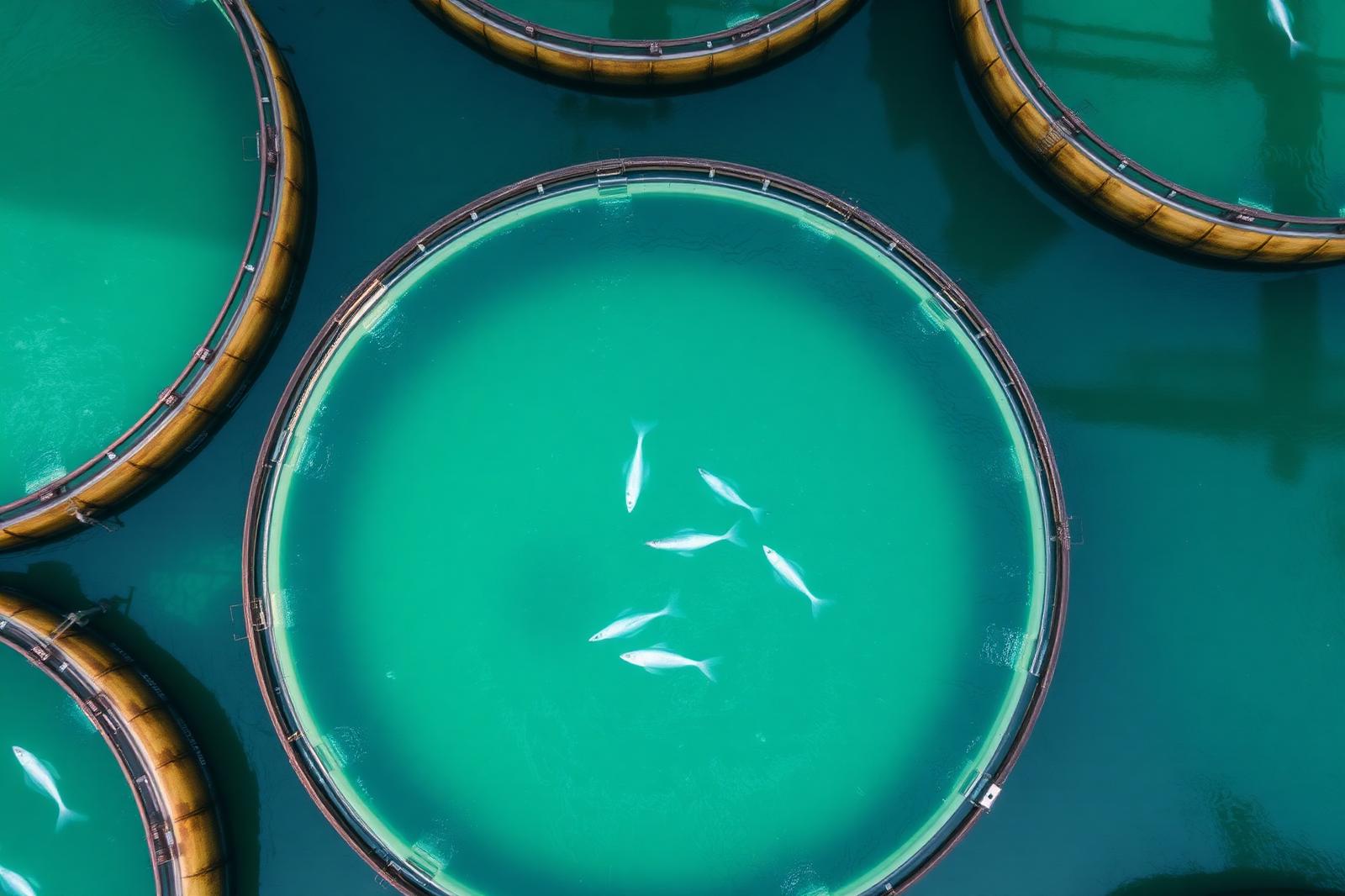
Aquaculture water treatment for RAS, hatcheries and open-water fish farms.
Concentrated stocking creates predictable water-quality problems: ammonia climbs, nitrate accumulates, biofilm blocks pipework and mucus builds up on gills. J-All's H²O products remove slime, mucus and biofilm without touching phytoplankton, and convert ammonia and nitrates into proteins that support long-term stability in fish farms, hatcheries and RAS systems.
Signals we hear from fish farms & aquaculture.
- Ammonia and nitrite spikes stressing stock
- Nitrate creeping up between water changes in RAS loops
- Biofilm blocking pipework, screens and drum filters
- Gill mucus or slime affecting feed conversion and welfare
- Reliance on frequent water exchange to hold quality
Outcomes for fish farms & aquaculture.
- Stable ammonia and nitrite control between water exchanges
- Biofilm and mucus removed without harming phytoplankton
- Improved fish welfare, feed conversion and growth performance
- Lower reliance on chemical treatments and full water changes
- Consistent water quality for long production cycles
Results vary by site. Reduction ranges, timelines and dosing rates shown are typical outcomes from comparable UK installations and depend on influent load, temperature, retention time, existing plant condition and the agreed dosing regime. A J-All specialist will confirm expected performance after a site assessment.
Why chemistry-only keeps failing.
Ammonia, nitrate, sludge and biofilm running the water quality in RAS, hatchery and open-water systems. These are biological problems at their core, so they keep coming back until the biology gets fixed. Bleaches, acids and dispersants push the symptoms downstream but leave the FOG, sludge, hydrocarbon or ammonia load untouched.
Aquaculture Water Treatment
Concentrated aquaculture creates predictable water-quality problems. J-All's H²O products remove slime, mucus and biofilm without touching phytoplankton, and convert ammonia and nitrates into proteins — supporting successful long-term operation of fish farms and RAS systems.
Full aquaculture water treatment detailsFish Farms & Aquaculture — common questions.
Everything buyers in fish farms & aquaculture ask us before the first assessment.
Trusted by UK operators.
“The FOG issues across our restaurant estate disappeared inside a month. Our facilities team stopped fielding emergency drain calls and our environmental health scores are the best they’ve ever been.”

“J-All’s biofertilizer brought two of our tired fields back into full production within a single season. Root mass alone was noticeably better at the first inspection.”

“Ammonia and biofilm stopped being our weekly headache. The J-All specialist knew our RAS system as well as we did — it’s the first supplier that’s truly consultative.”

Tell us about your fish farms & aquaculture site.
Send the problem, the site scale and any readings you have. A J-All specialist replies within one working day — no sales sequence, no forwarding to a call centre.